All solar eclipses occur when the Moon passes between the Sun and Earth, but they do not always look the same. Depending on the observer's location and the Moon's apparent size compared with the Sun, solar eclipses fall into three main types: total, annular and partial.
Total eclipse
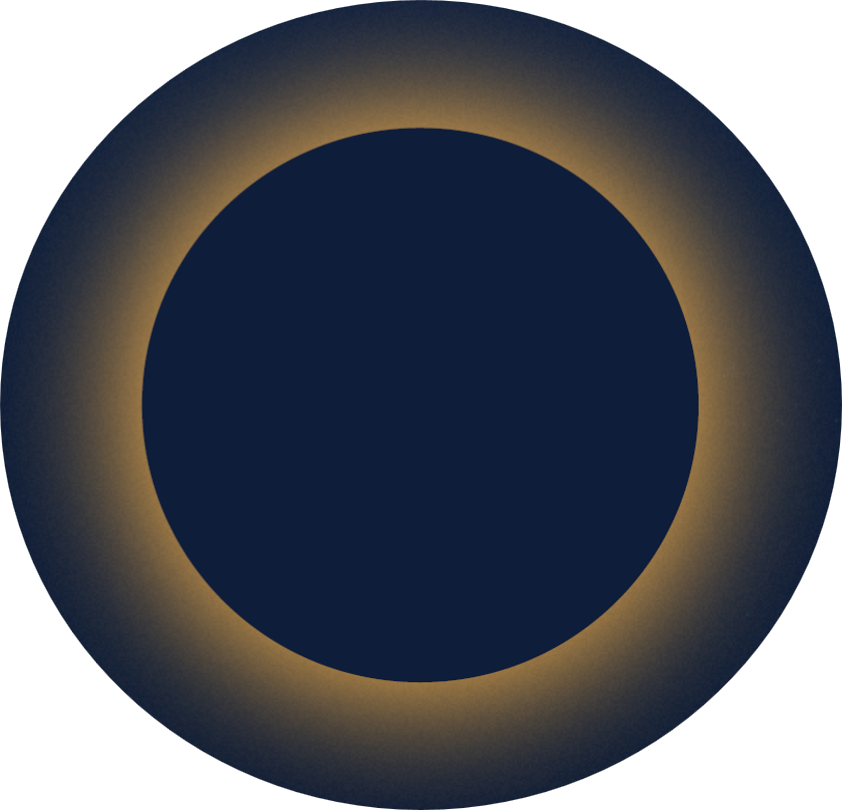
This occurs when the Moon completely covers the solar disc because it is close to perigee. Daylight briefly fades and the solar corona becomes visible.
Annular eclipse
This occurs when the Moon is close to apogee and its angular diameter is smaller than the Sun's. A bright ring of fire remains visible around it.
Partial eclipse
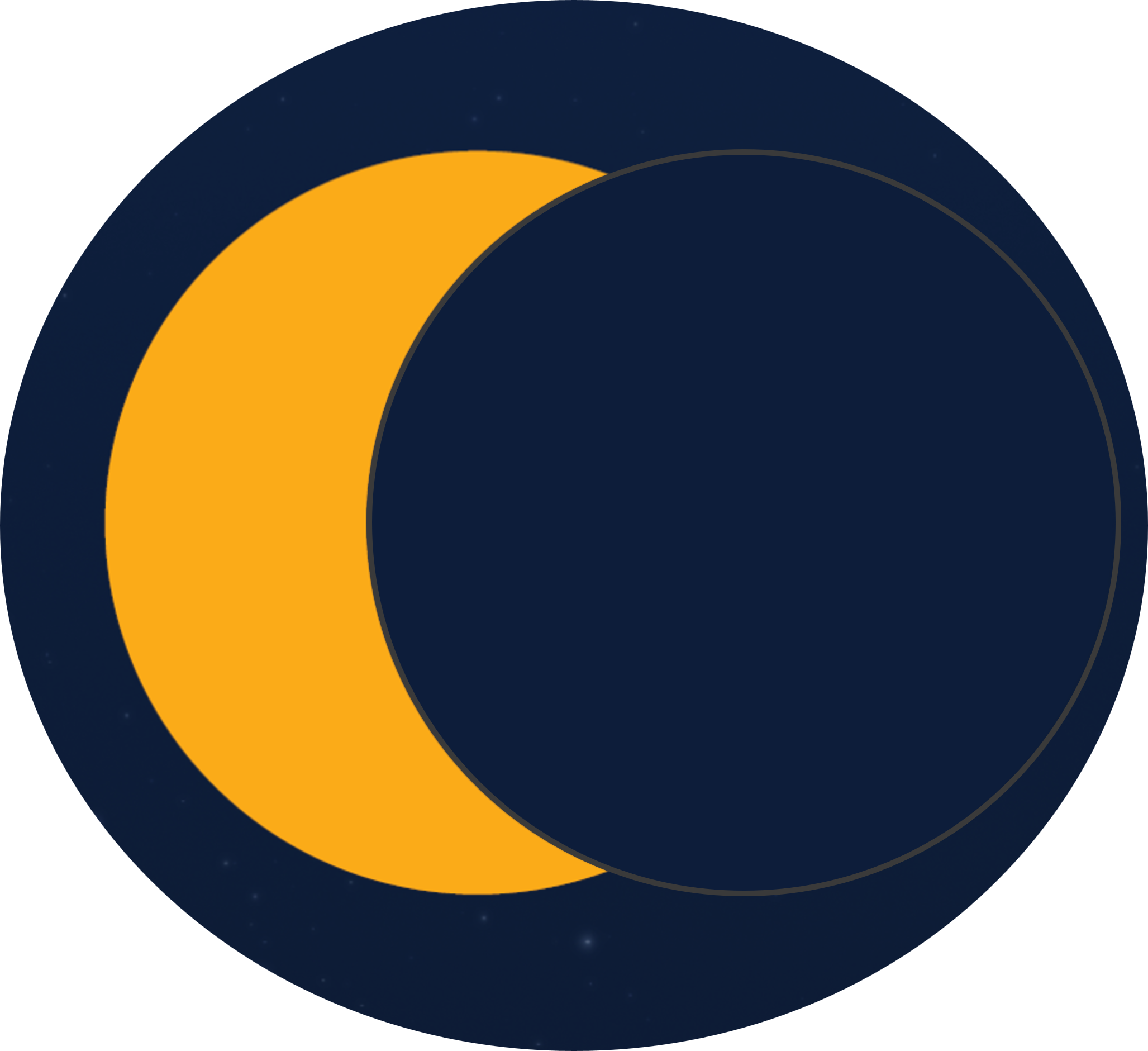
Here, the Moon covers only part of the Sun. A partial eclipse may occur on its own or form the opening and closing phases of any total or annular eclipse.
Total vs annular eclipses: what determines the difference?
The difference between total and annular eclipses comes from changes in the Earth–Moon distance, caused by the elliptical shape of the Moon's orbit. When the Moon is closer to Earth, it can appear larger than the Sun and cover it completely. When it is farther away, it appears smaller and leaves a ring of sunlight visible around its edge.
Total solar eclipse
Larger MoonSmaller Moon
Move the slider to change the Moon's apparent size and compare a total eclipse with an annular eclipse.
Umbra, penumbra and antumbra: a play of shadows
Explore how the shadow cast by the Moon changes as its distance from Earth varies.
Lunar umbra: total eclipse
Moon closerMoon farther away
Move the slider to take the Moon farther away: the umbra no longer reaches Earth and the antumbra appears, producing an annular eclipse.
These shadow regions determine what observers see on Earth's surface: where the umbra reaches, the eclipse is total; where the antumbra reaches, it is annular; and throughout the surrounding penumbra, it appears partial.
Umbra
The Moon's central shadow. If it reaches Earth, it creates the narrow path of totality.
Antumbra
The continuation of the shadow beyond the point where the umbra ends before reaching Earth. Observers within it see the path of annularity.
Penumbra
The broader region of partial shadow. From within it, the Moon covers only part of the Sun, so the eclipse is visible across a much larger area.
The shadow's path across Earth
As the shadow moves across Earth, it traces bands over the rotating planet. The widest region is always the penumbra, where observers see a partial eclipse. The much narrower central path marks the contact of the umbra or antumbra with Earth, producing totality or annularity, respectively.
Central path: narrow because it marks where the umbra or antumbra meets Earth.
Partial-eclipse area: much wider because the penumbra covers the region around the central path.
What about partial eclipses?
As we have seen, partial eclipses occur in regions of Earth that lie within the Moon's penumbra. From there, the Moon covers only part of the solar disc, so the Sun neither disappears completely nor forms a perfect ring.
This is why many total and annular eclipses are also partial across a much larger area of the planet. While a narrow path experiences totality or annularity, the surrounding regions remain within the penumbra and see a partial eclipse.