An introduction to eclipses, their different types and the trio of solar eclipses visible between 2026 and 2028.
The orbital dance of the Sun, Earth and Moon
As the Sun, Moon and Earth move through their orbital dance, they create some of the most spectacular astronomical phenomena we can observe: solar and lunar eclipses.
Eclipses occur when the Sun, Earth and Moon align. As sunlight reaches them, the body in the middle casts its shadow on the other.
This is possible because Earth orbits the Sun while the Moon orbits Earth. As they move, the three bodies occasionally come into a very particular alignment.
Solar eclipse
When the Moon is in the middle, it casts its shadow on Earth. From the areas reached by that shadow, we can see a solar eclipse, in which the Moon partially or completely covers the Sun.
Lunar eclipse
When Earth is in the middle, the Moon darkens as it passes through our planet's shadow. Anyone on Earth's night side may be able to see a lunar eclipse.
Solar eclipse: the Moon lies between the Sun and Earth, casting its shadow over a particular region of our planet.
What do eclipses look like from Earth?
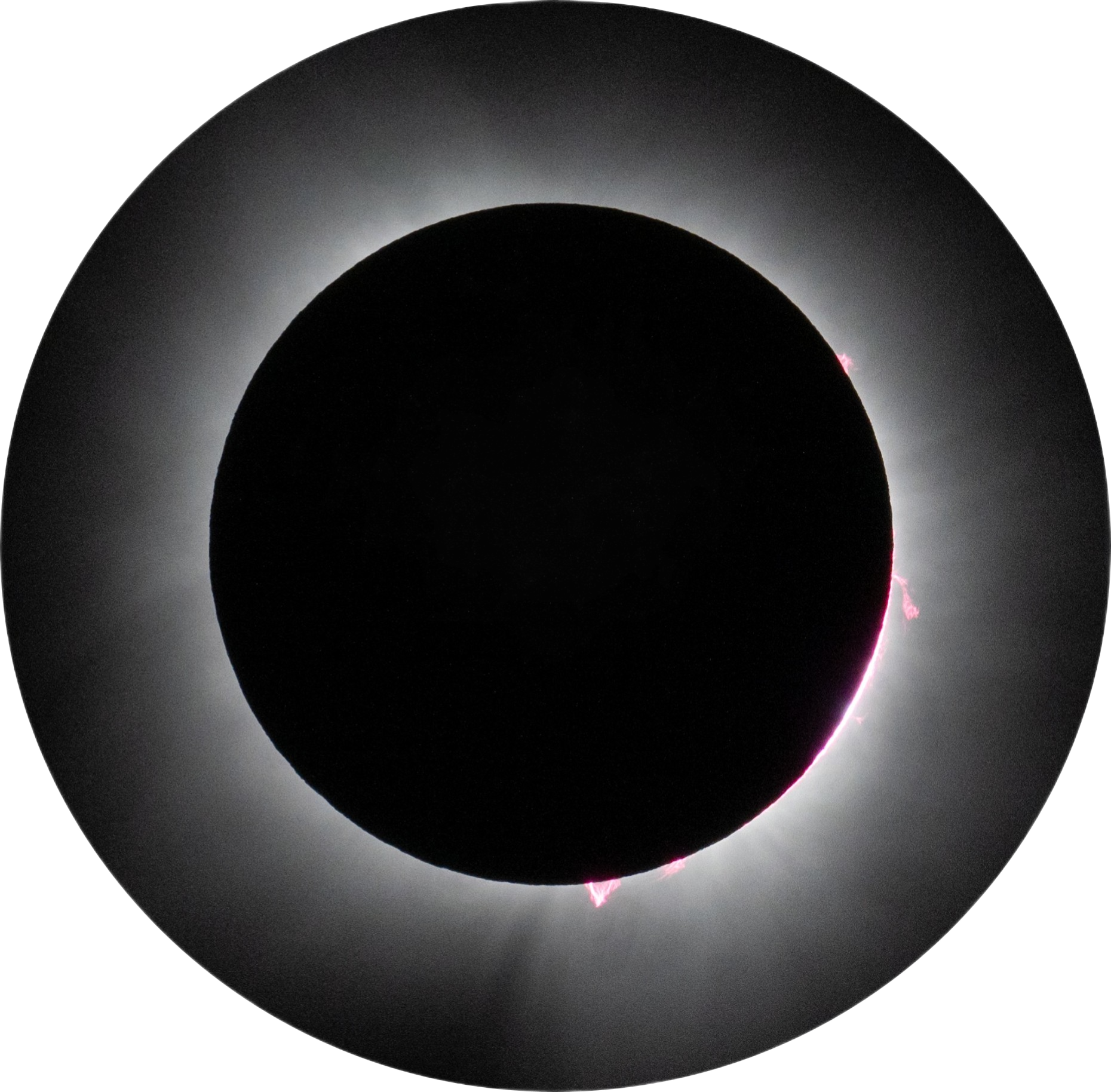
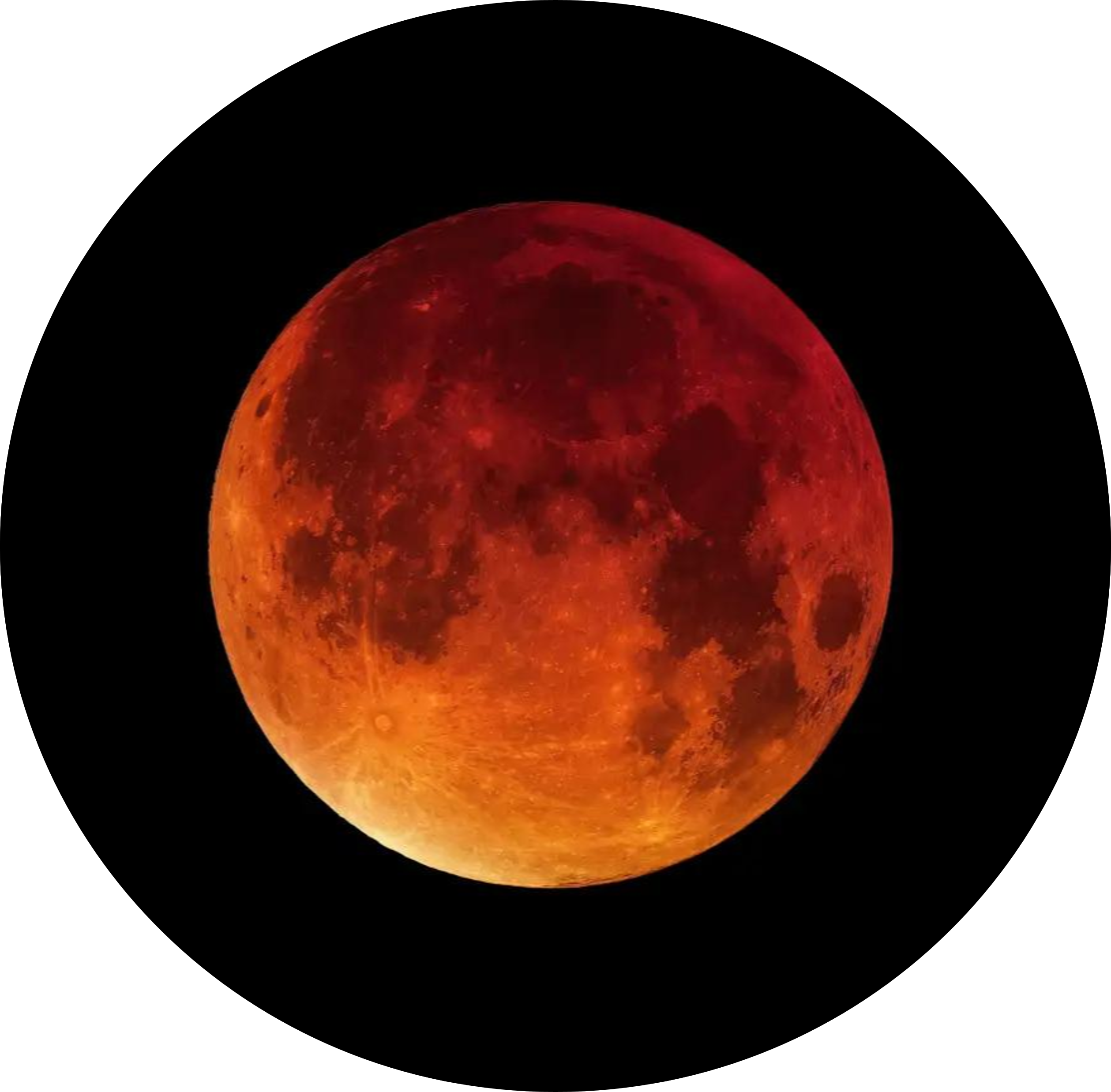
Use the slider below to compare the two phenomena and discover some of their most striking visual differences. During a total solar eclipse, the solar corona becomes visible; during a total lunar eclipse, Earth's atmosphere gives the Moon its distinctive reddish tones.
Solar corona The Sun's outer atmosphere, visible as a halo of white light during totality.
Solar prominences Reddish flashes or loops of plasma extending from the Sun's surface.
Blood Moon Earth's atmosphere scatters blue light and allows mainly red light to pass through.
Lunar maria Darker areas of the Moon that can take on deeper reddish tones.
Lunar highlands Brighter regions that often appear orange or reddish during the eclipse.
Total solar eclipseTotal lunar eclipse
Move the slider to the right to gradually overlay the total lunar eclipse on the total solar eclipse.
Why don't eclipses happen every month?
It may seem that solar and lunar eclipses should happen every month, but they do not. The Moon's orbit is tilted by about 5° relative to the ecliptic, the plane of Earth's orbit around the Sun.
The Moon's phases also matter. At new Moon, the Moon lies between the Sun and Earth, making a solar eclipse possible. At full Moon, Earth lies between the Sun and Moon, making a lunar eclipse possible.
However, an eclipse can occur only when the Moon is close to one of its nodes, the points where its orbit crosses the ecliptic. This is why eclipses are relatively rare, occurring only two to five times a year.
Ecliptic plane Earth's orbit Moon's orbit
Eclipse possible: the Moon is passing close to a node
Node: solar eclipseNode: lunar eclipse
Move the Moon along its orbit. A solar eclipse is possible at new Moon and a lunar eclipse at full Moon, but only when the Moon is close to a node.