Solar mission milestones
Space missions do more than observe the Sun: they help us piece together how it works, how its activity evolves and how it shapes Earth’s space environment. Different missions have revealed new clues about the solar wind, the corona, the Sun’s poles and the phenomena that can affect satellites, communications and power grids.
What have we discovered about the Sun?
Each mission has added a different piece to the solar puzzle: some have studied the solar wind, others have revealed details of the corona, while others have helped us understand how the Sun’s activity affects our planet.
Ulysses ↗
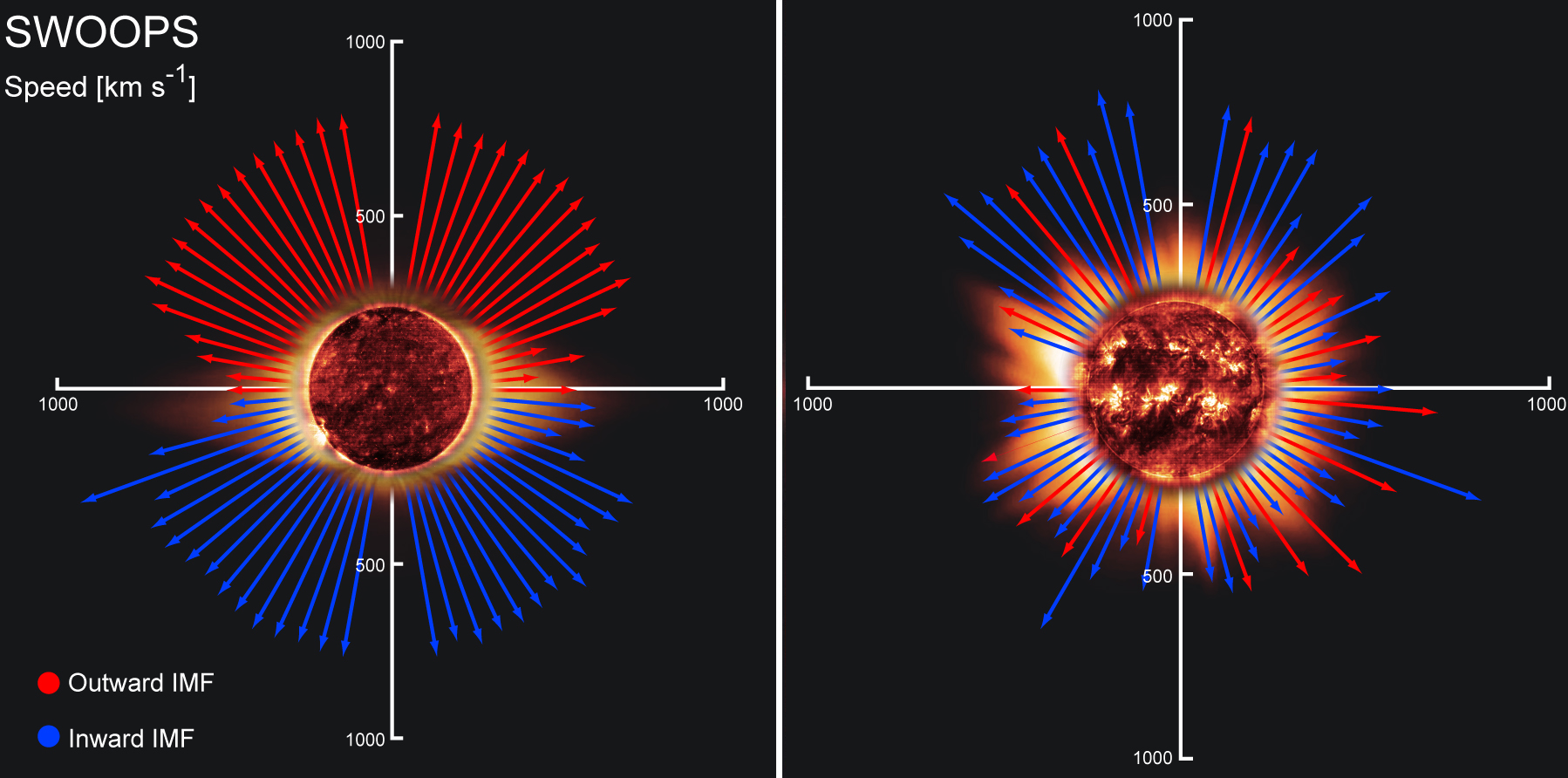
1. The solar wind also reveals secrets at the poles
Ulysses revealed that the solar wind is remarkably uniform near the poles, challenging earlier models and opening up a new way to study solar activity beyond the usual plane of observation.
SOHO ↗
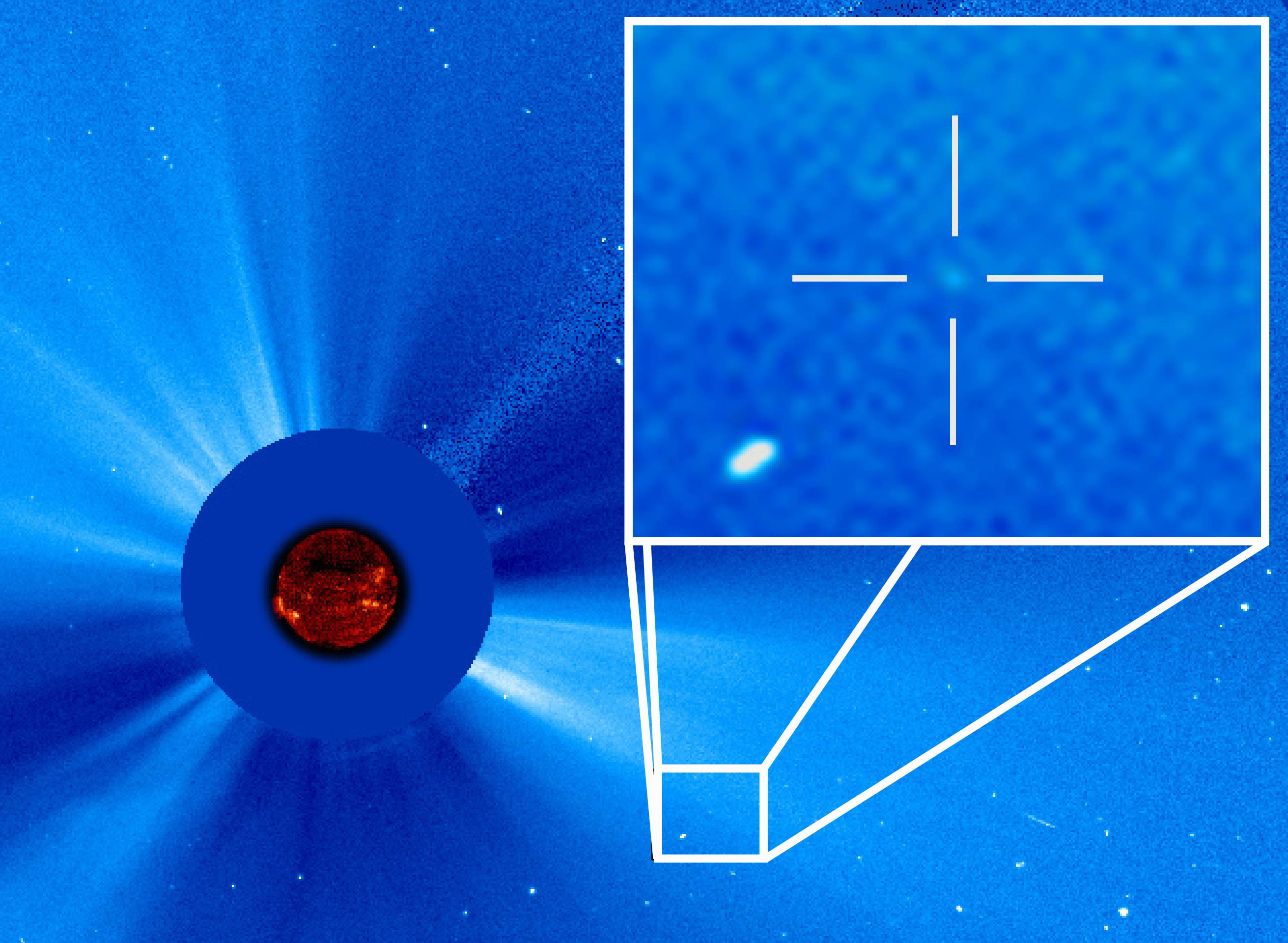
2. Thousands of comets discovered unexpectedly
SOHO became the world’s most successful comet hunter, detecting more than 4,000 objects, transforming our view of the inner Solar System and demonstrating the scientific value of continuously observing the region around the Sun.
SOHO / Solar Orbiter ↗
3. The solar corona helps us understand solar storms
SOHO and Solar Orbiter have enabled scientists to study coronal mass ejections (CMEs), key phenomena for understanding how solar storms originate and the effects they may have on Earth.
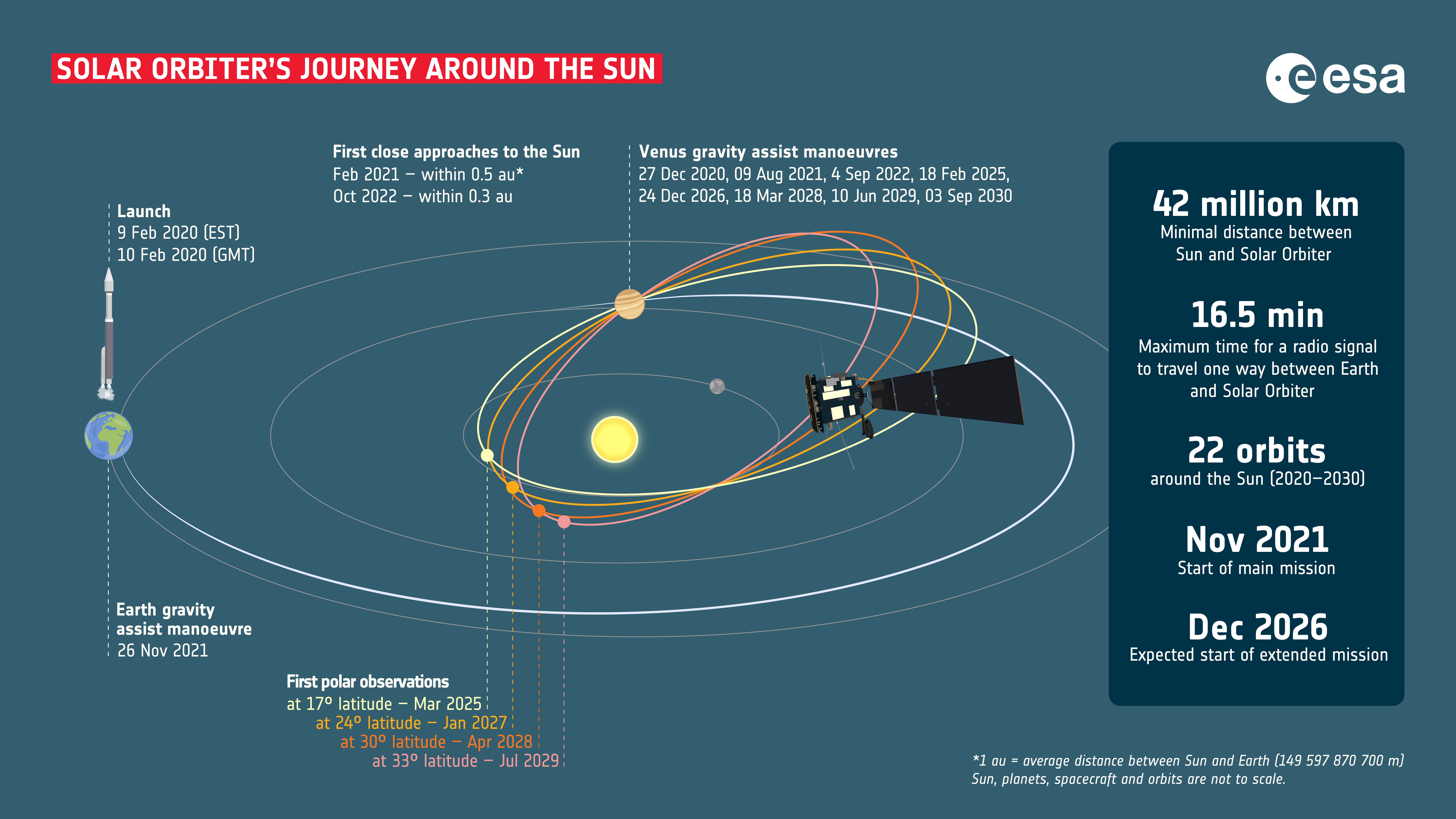
Solar Orbiter ↗
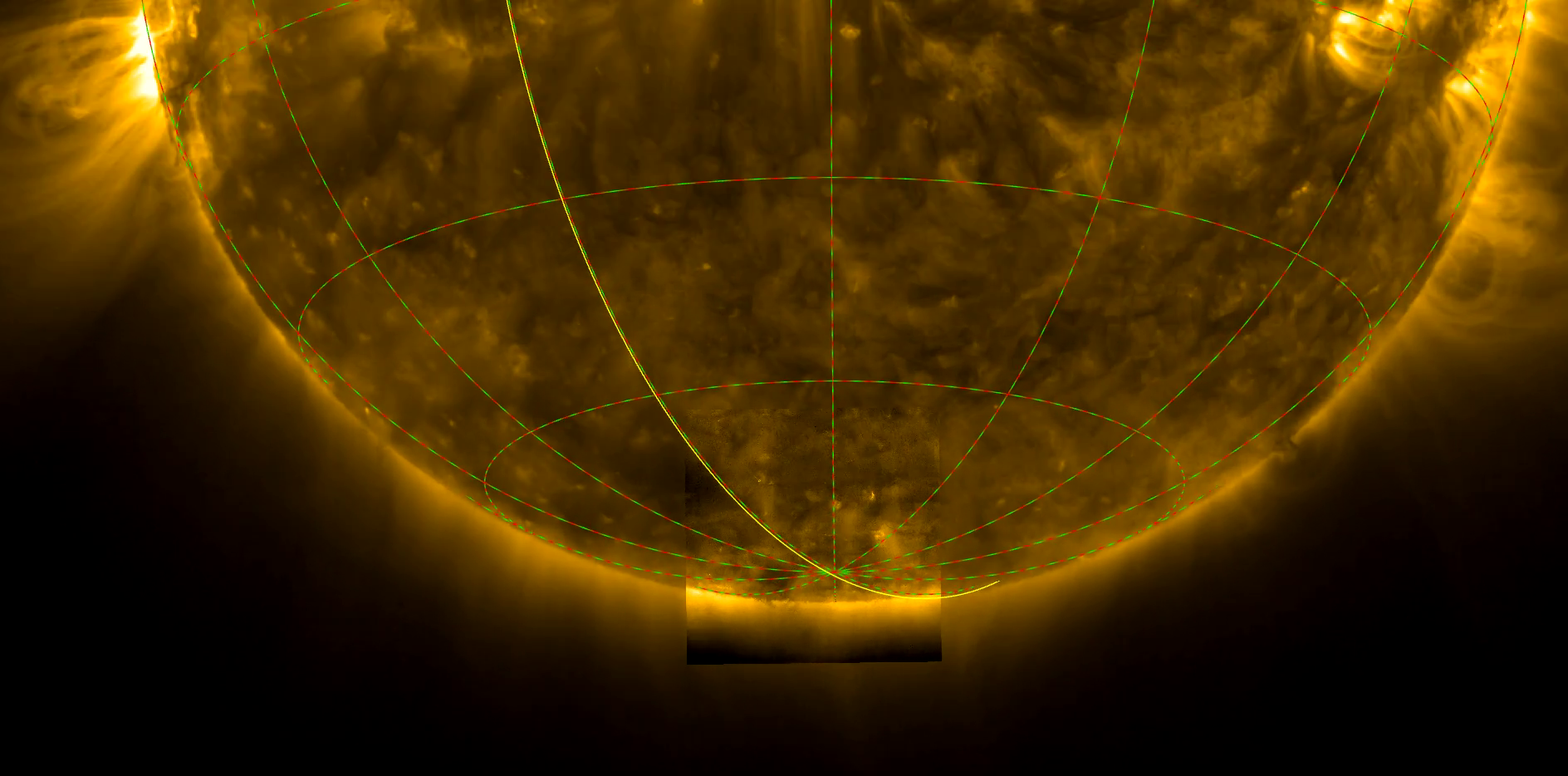
4. The Sun’s poles are coming into view
Solar Orbiter has captured direct images of the Sun’s poles, regions that are essential to understanding its magnetic field, its activity cycle and the way solar dynamics are organised.
Solar Orbiter in detail
Solar Orbiter plays a special role in this exploration, combining high-resolution images with direct measurements to investigate how solar activity begins and evolves.
How does solar activity affect Earth?
The Sun’s influence extends far beyond the space immediately around it. Solar particles and storms can interact with Earth’s magnetosphere and affect technologies we rely on every day.
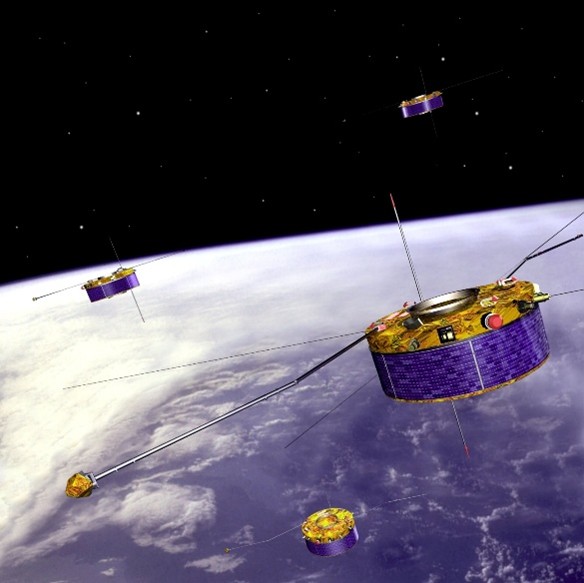
Cluster ↗
Earth’s magnetic boundary
Cluster studies how the solar wind interacts with Earth’s magnetic environment, helping us understand how solar particles reach our planet.
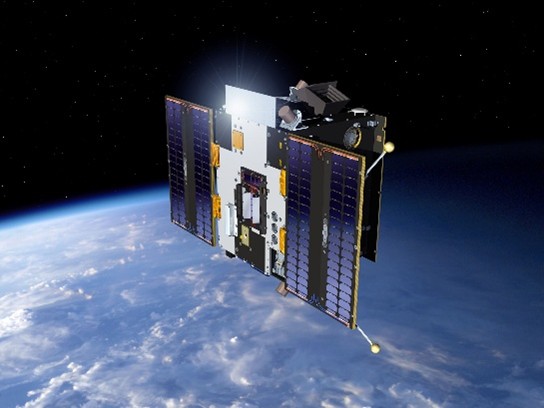
Proba-2 ↗
Monitoring space weather
Proba-2 observes solar activity and helps monitor space weather, supporting the detection of phenomena that can affect satellites, communications and power grids.
The future of solar observation
Upcoming missions aim not only to observe the Sun in greater detail, but also to develop new ways of viewing regions that have so far proved difficult to study.
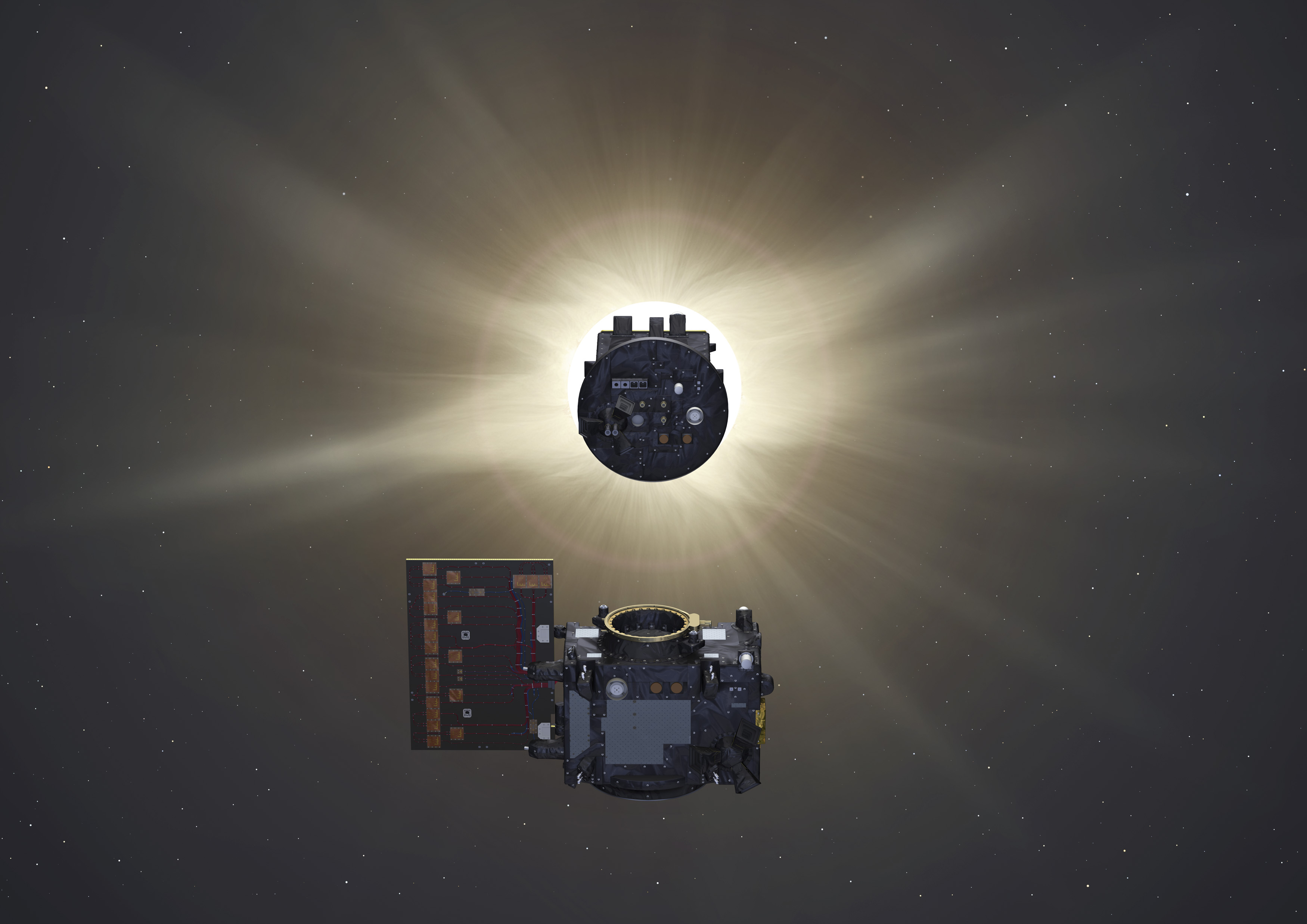
Proba-3 ↗
An artificial eclipse in orbit
Proba-3 will create artificial eclipses in space, allowing the solar corona to be studied with unprecedented precision.
-
Observations free from stray light.
-
Satellites flying in precise formation.
-
New data on faint structures in the corona.
Proba-3 / SOHO / Proba-2 ↗
The solar corona as never seen before
Combining observations from several missions allows us to follow a coronal mass ejection across different regions of the solar environment, including the inner corona observed by Proba-3.
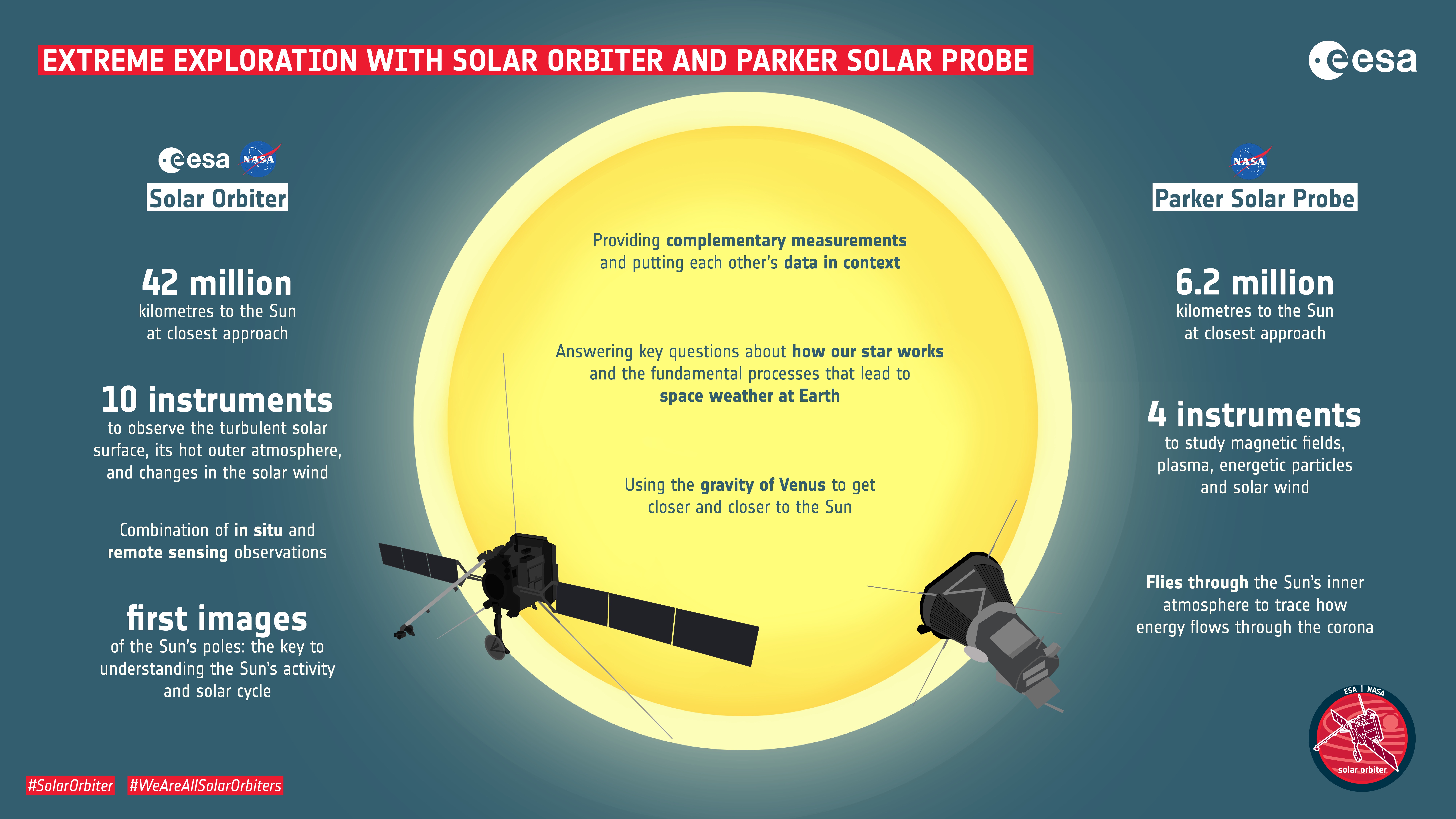
Solar Orbiter vs Solar Probe
Although both missions study the Sun, they take different yet complementary approaches: one explores the connection between the Sun and the solar wind from a global perspective, while the other travels much closer to our star.
|
|