A solar eclipse does not make the Sun less intense; it makes it more tempting to look at. The photosphere continues to emit visible and invisible radiation, and the retina does not warn us with pain when it receives too much energy; that is why prevention must happen before looking up.
The practical rule is simple: look directly at the Sun only with certified solar filters, or use indirect methods. Cameras, binoculars and telescopes concentrate light, so they require specific solar filters placed at the front of the optics.
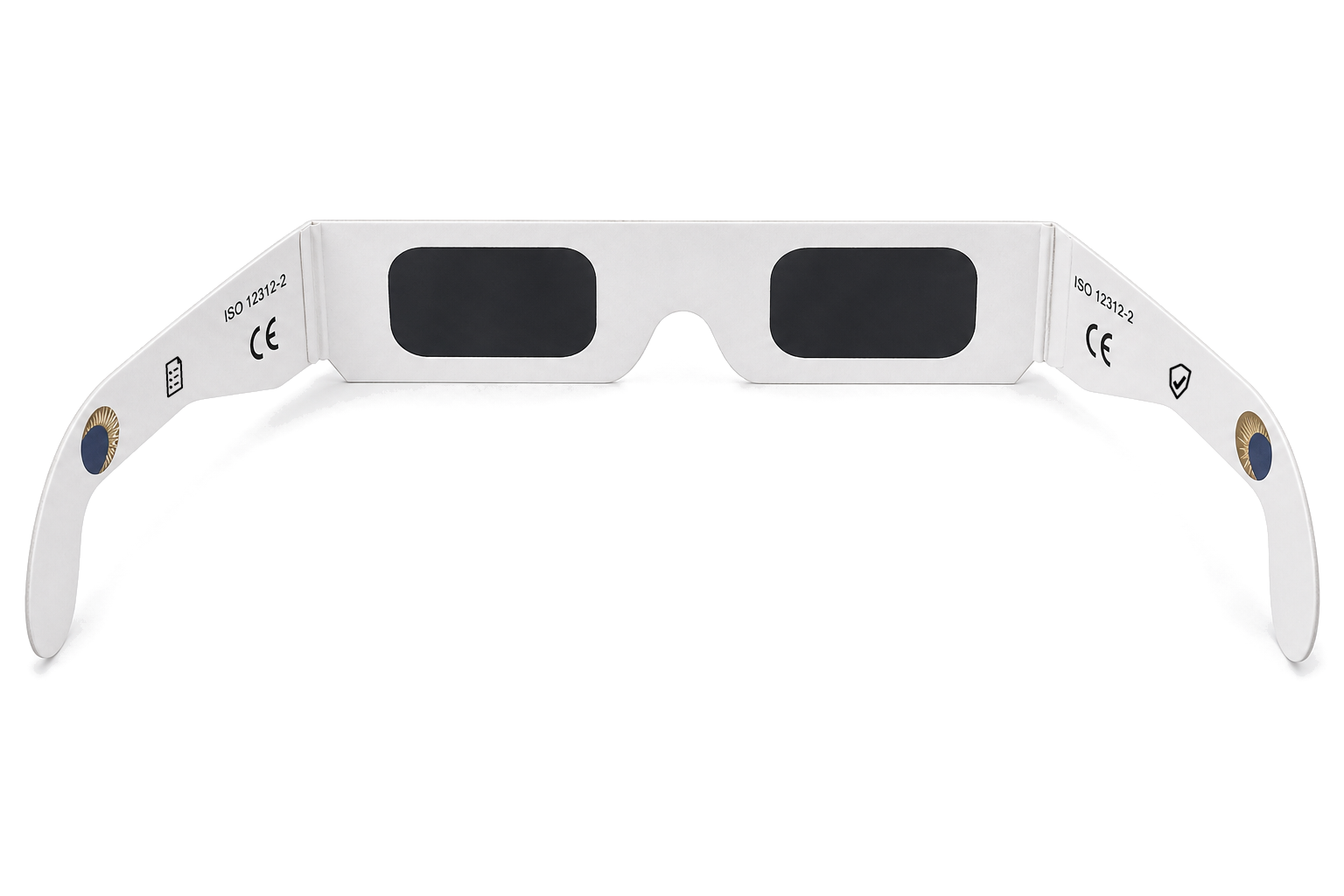
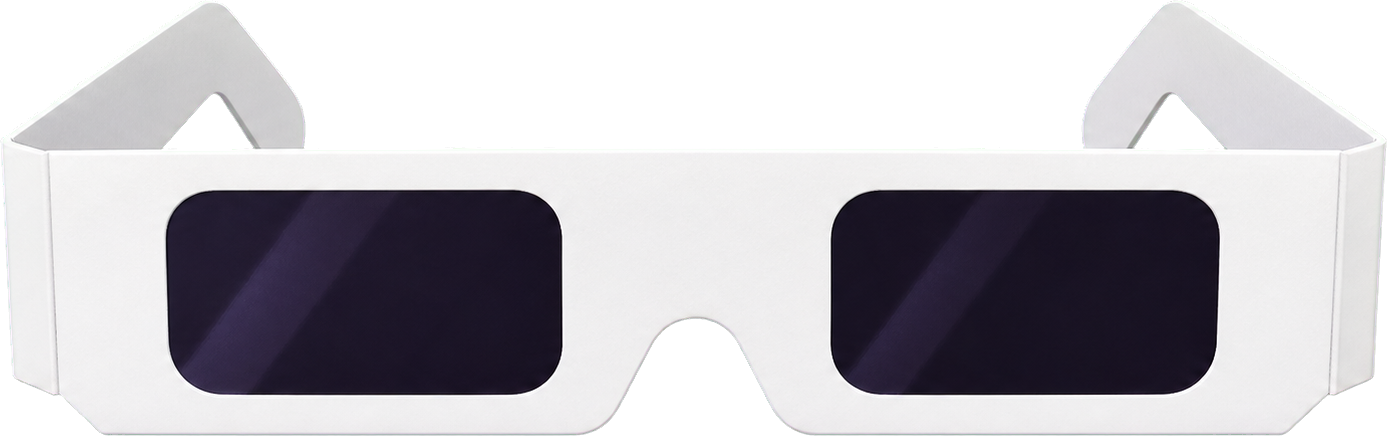
In the following viewer, you can explore which features safe eclipse glasses should include: certification, solar filters, safety warnings and instructions for use. Click the labels to expand each element and review how to use the glasses correctly.
Safe use of eclipse glasses
Select a label on the viewer to see what you should check before looking at the Sun.
Certification: this is the safety certification indicating that the viewer is designed for direct solar observation. Safe glasses should always show the ISO 12312-2 reference and, where applicable, the CE marking.
How to observe the Sun directly
A short demonstration on how to use eclipse glasses to observe the Sun safely.
Safety viewer during the eclipse
Move through the viewer to identify the eclipse phases in which certified glasses are essential. Remember that while any bright part of the Sun remains visible, it cannot be observed directly without protection.
Use certified glasses
Before totality
Initial partial phase
As long as any part of the bright disk remains visible, look only with eclipse glasses or a certified solar viewer.
Initial partial phaseTotalityFinal partial phase
Move the control to follow the eclipse from beginning to end. To watch it again, restart the sequence.
False protection for looking at the Sun
The following materials often give a false sense of safety because they reduce the Sun’s visible brightness; however, they are not safe solar filters. Placing eclipse glasses behind binoculars, telescopes or cameras does not work either: instruments require a specific solar filter at the front of the optics.
Sunglasses
Even very dark sunglasses are not a substitute for a certified solar filter.
X-rays or negatives
They darken the view, but do not guarantee safe radiation blocking.
CDs, aluminium foil or smoked glass
They are homemade tricks, not solar-observation equipment.
Cameras, binoculars or telescopes without a filter
Concentrated light can damage eyes, sensors and incorrectly placed filters.
Safe alternative: indirect observation
Observing the Sun through a pinhole camera is a safe alternative because it turns direct observation into a projection: we do not look at the Sun directly; we look at the image formed inside the box. This alternative allows us to follow the shape of the solar disk or the eclipse without exposing our retina to concentrated light.
Small pinhole: sharper imageLarge pinhole: more light, less sharpness
Move the control to change the pinhole size: a small hole produces a sharper and dimmer image; a large one lets in more light, but makes the projection blurrier.
How to observe the Sun indirectly
A short demonstration showing how to point a pinhole camera towards the Sun and observe the projected image on the inner screen, without looking directly at the solar disk.